Zhou Gong
周公
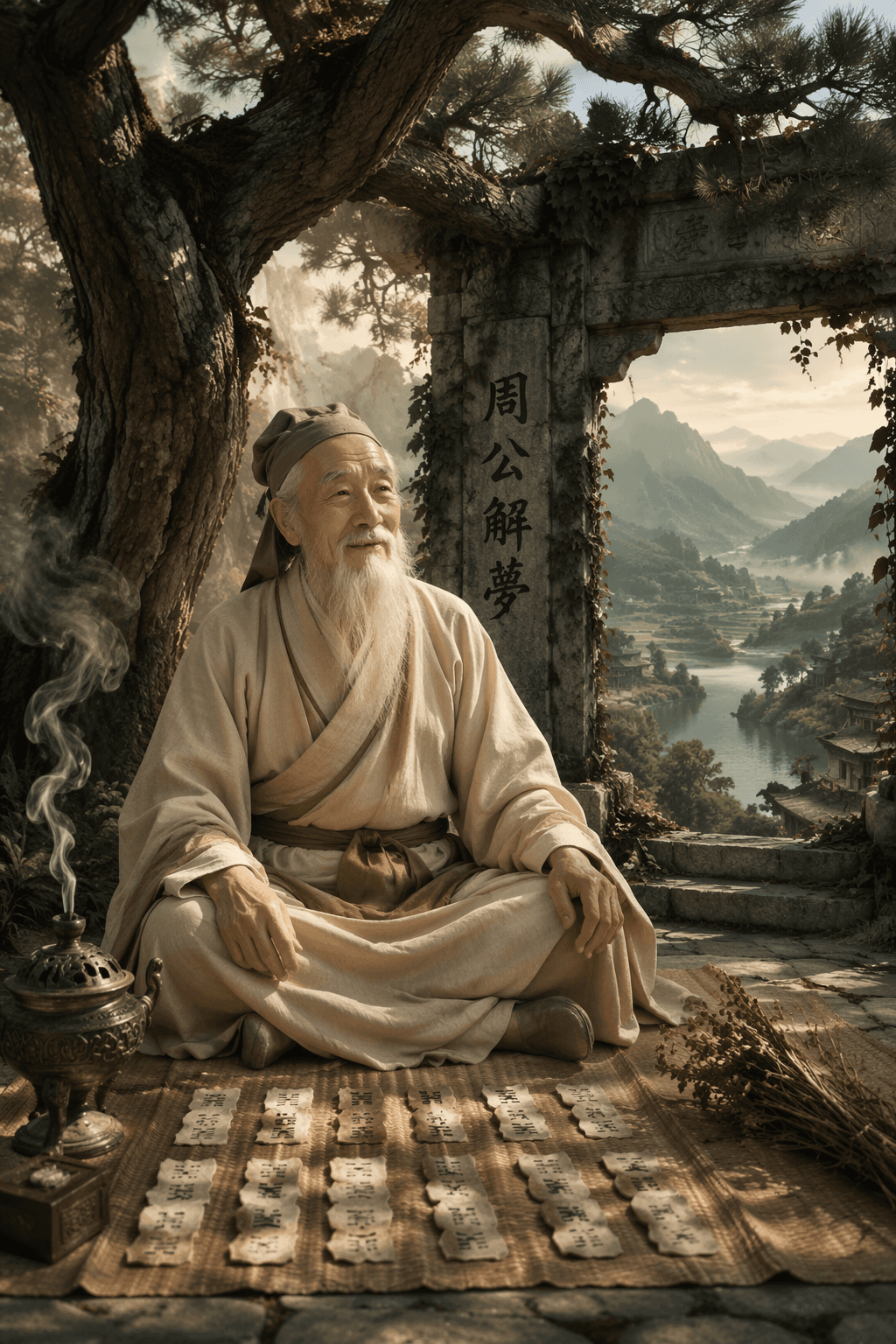
Zhou Gong (11th century BCE) was a foundational figure in Ancient Civilization. Known for teachings on ritual order (li), heavenly mandate (tianming), transformational patterns (yi), Zhou Gong shaped Chinese civilization for millennia.
Biography
The Architect of Chinese Civilization
Zhou Gong — the Duke of Zhou, born Ji Dan — stands at the origin of everything that became recognizably Chinese. In the aftermath of the Zhou conquest of Shang around 1046 BCE, the new dynasty faced an existential problem: how to justify replacing one heaven-sanctioned regime with another. The Shang had ruled for five centuries with the authority of blood sacrifice and divine oracle. If the Zhou simply claimed military victory, their rule would rest on force alone and invite the same fate.
Zhou Gong's answer was the Mandate of Heaven (tianming). Heaven — not a deity but an impersonal moral order — grants authority to those who govern virtuously and withdraws it from those who abuse power. The Shang lost the mandate through cruelty; the Zhou earned it through virtue. This was not propaganda but a genuine theory of accountable governance, and it shaped Chinese political thought for three thousand years. Every subsequent dynasty claimed the mandate; every dynasty knew it could be revoked.
The Systematizer of Change
Beyond political theory, Zhou Gong's most enduring contribution lies in the Book of Changes — the I Ching or Yijing. King Wen of Zhou had organized the eight trigrams into sixty-four hexagrams during his imprisonment by the Shang. Zhou Gong, according to tradition, wrote the line statements (yaoci) that interpret each hexagram's individual lines, transforming the oracle from a flat lookup table into a nuanced system that reads the direction of change within change itself.
The I Ching's philosophical impact far exceeds its use as a divination manual. Its core premise — that reality is a pattern of perpetual transformation, that every situation contains seeds of its opposite, that wisdom lies in reading the moment and acting in alignment with the tendency of change — became a foundational assumption of Chinese thought. Daoism, Confucianism, and the strategic arts all draw from this well. When a modern strategist speaks of "reading the terrain" or "surfing the wave," they are, unknowingly, speaking I Ching.
The Father of Ritual
Zhou Gong's third transformation was the creation of a comprehensive system of rites and music. Where the Shang had governed through terror and sacrifice, Zhou Gong proposed that civilization requires li — structured forms of social interaction that encode respect, hierarchy, and mutual obligation. The marriage ritual, the funeral ritual, the audience ritual, the ancestral sacrifice ritual — each was a choreography that turned raw human emotion into civilized expression. Paired with li was yue — music, which Zhou Gong understood not as entertainment but as moral infrastructure. The right music cultivates the right feelings; the right feelings sustain the right actions.
This pairing of ritual and music became the DNA of Chinese social life. The formal dinner where the host offers the first toast to the eldest guest, the wedding where the bride serves tea to her new parents, the business meeting where both sides begin with mutual acknowledgment before discussing terms — all are distant descendants of Zhou Gong's insight that form is not empty but filled with meaning.
The Dream Interpreter
The legend of Zhou Gong interpreting the young King Cheng's ominous dream became the basis for China's oldest tradition of dream analysis. The Zhou Gong Jie Meng (周公解梦), compiled over centuries, catalogs thousands of dream symbols and their prognostications. It anticipated Freud by three millennia in treating dreams as a language the unconscious speaks — though Zhou Gong's tradition reads dreams as communications about the future rather than echoes of the past. Today, when a Chinese person wakes from a vivid dream and asks what it might portend, they are, however unconsciously, invoking Zhou Gong.
A Legacy Beyond Measure
Zhou Gong's influence is so pervasive that it becomes invisible. He did not write philosophical treatises in the manner of Laozi or Confucius; he built institutions, codified practices, and systematized knowledge. The I Ching, the rites, the Mandate of Heaven — these are not ideas to be debated but frameworks to be lived within. Every Chinese person who navigates social relationships with ritual care, every leader who worries about whether they have lost legitimacy, every thinker who assumes that reality is fundamentally dynamic rather than static, is operating within the architecture Zhou Gong constructed. He is the architect of Chinese civilization, and the building still stands.
Core Concepts
Ritual Order (Li) (礼制)
Zhou Gong established that civilization requires structured social forms. Ritual (*li*) is not mere ceremony — it is the grammar of human relationships, giving shape to respect, obligation, and belonging. Without ritual, society is a body without bones.
周公确立了文明需要结构化的社会形式这一原则。礼不仅是仪式,更是人际关系的语法,赋予尊重、义务与归属以形状。没有礼,社会便如无骨之躯。
Heavenly Mandate (Tianming) (天命)
Zhou Gong articulated the doctrine that political authority derives from heaven's will, contingent on the ruler's virtue. A ruler who loses virtue loses the mandate. This was the first systematic theory of accountable governance in human history.
周公阐明了政治权威源自天命、以统治者德行为条件的思想。失德则失命。这是人类历史上第一个系统性的权力问责理论。
Transformational Patterns (Yi) (变易)
Through the I Ching's hexagram system, Zhou Gong codified the idea that all reality is a pattern of perpetual transformation. Nothing is static; every situation contains seeds of its opposite. The wise person reads these patterns and acts at the right moment.
通过《周易》的卦象体系,周公编码了"一切现实皆为永恒转化的模式"这一观念。没有静止之物;每一情境都蕴含其对立面的种子。智者辨识这些模式,在恰当时刻行动。
Music as Moral Education (Yue) (乐教)
Zhou Gong paired ritual with music, believing that harmonious sounds cultivate harmonious souls. Music was not entertainment but civic infrastructure — it shaped the emotional landscape of a people and aligned individual hearts with social order.
周公将礼与乐并置,认为和谐的音声滋养和谐的灵魂。乐不是消遣,而是公民基础设施——它塑造一个民族的情感地貌,使个人之心与社会秩序相合。
Notable Quotes
“When the ruler is virtuous, the people follow; when the ruler loses virtue, heaven withdraws its mandate.”
为政以德,德失则天命移。
This is the foundational statement of the Mandate of Heaven doctrine — authority is conditional, not absolute. It introduced the revolutionary idea that rulers serve at heaven's pleasure and must earn their position through moral conduct.
“Rites are the framework of the state; music is the harmony of its people.”
礼者,国之干也;乐者,民之和也。
Zhou Gong understood that law alone cannot sustain a civilization. Ritual gives social interaction its structure; music gives it its feeling. Together, they create a society that is both ordered and alive.
“The superior man examines himself three times a day.”
吾日三省吾身。
Self-reflection as daily practice became the core discipline of Confucian cultivation. The idea that moral growth requires constant self-examination traces directly to Zhou Gong's emphasis on virtue as the basis of all authority.
“Heaven sees as the people see; heaven hears as the people hear.”
天视自我民视,天听自我民听。
This remarkable statement links divine will to popular sentiment — heaven's mandate is not inscrutable but expressed through the people's satisfaction or discontent. It is an ancient precursor to democratic accountability.
“In change there is the great ultimate; from the great ultimate emerge the two forces.”
易有太极,是生两仪。
This cosmological statement describes the origin of reality as a dynamic process — from unity emerges duality (yin and yang), and from duality emerges multiplicity. It is one of the earliest systematic models of cosmogenesis.
“The way of heaven reduces the excessive and augments the deficient; the way of man reduces the deficient and augments the excessive.”
天道损有余而补不足,人道损不足以奉有余。
A critique of human inequality written millennia before Piketty. Heaven naturally redistributes toward balance; human societies tend toward concentration. Moral governance means aligning human systems with heaven's tendency toward equilibrium.
“When the wind blows over the earth, all things respond; when the ruler acts with virtue, all people follow.”
风行地上,万物响应;为政以德,万民从之。
The image of wind over earth suggests that influence should be gentle, pervasive, and responsive — not forceful or commanding. Good leadership works like weather: invisible in its mechanism, unmistakable in its effect.
Modern Influence
The Rites That Shaped Three Thousand Years
Zhou Gong's system of rites and music (li and yue) created the template for every subsequent Chinese social order. The wedding ceremony you attend in a Chinese restaurant, the seating hierarchy at a banquet, the way a business negotiation follows ritualized steps of respect — all trace back to Zhou Gong's insistence that civilization requires form. His insight was that unstructured human interaction devolves into chaos; ritual gives relationships a container.
The I Ching in Modern Decision-Making
The Book of Changes, which Zhou Gong helped systematize from King Wen's earlier work, has become a global tool for strategic thinking. Silicon Valley executives consult it before product launches. Management theorists cite its emphasis on reading patterns of change. Jung saw it as an archetype of synchronicity. The hexagram system — six lines encoding sixty-four states of transformation — remains one of the most compact models of dynamic systems ever created.
Dream Interpretation Across Cultures
Zhou Gong's association with dream interpretation gave rise to the Zhou Gong Jie Meng (周公解梦), a dictionary of dream symbols still referenced in China today. This tradition anticipated Freud by three thousand years, treating dreams as a language the unconscious speaks about the future rather than the past. Modern psychology's interest in dream work owes something to this ancient premise that dreams are not random noise but meaningful communication.
Read the Story
Experience Zhou Gong's philosophy through Sophie's narrative journey.
Read Chapter →Related Content 相关内容
Frequently Asked Questions常见问题
What is Zhou Gong known for?周公 以什么著称?+
Zhou Gong (11th century BCE) is known for Ritual Order (Li), Heavenly Mandate (Tianming), Transformational Patterns (Yi). As a key figure in Ancient Civilization, Zhou Gong's ideas shaped Chinese thought for centuries.
What era did Zhou Gong live in?周公 生活在什么时代?+
Zhou Gong lived during the 11th century BCE.
What school of thought did Zhou Gong found or belong to?周公 属于哪个学派?+
Zhou Gong belonged to the Ancient Civilization school (上古文明).
Want to speak with Zhou Gong 周公? Try the Oracle.
Consult the Oracle →Free: 3 consultations per day · Pro: 10 per day + deep readings