Sunzi
孙子
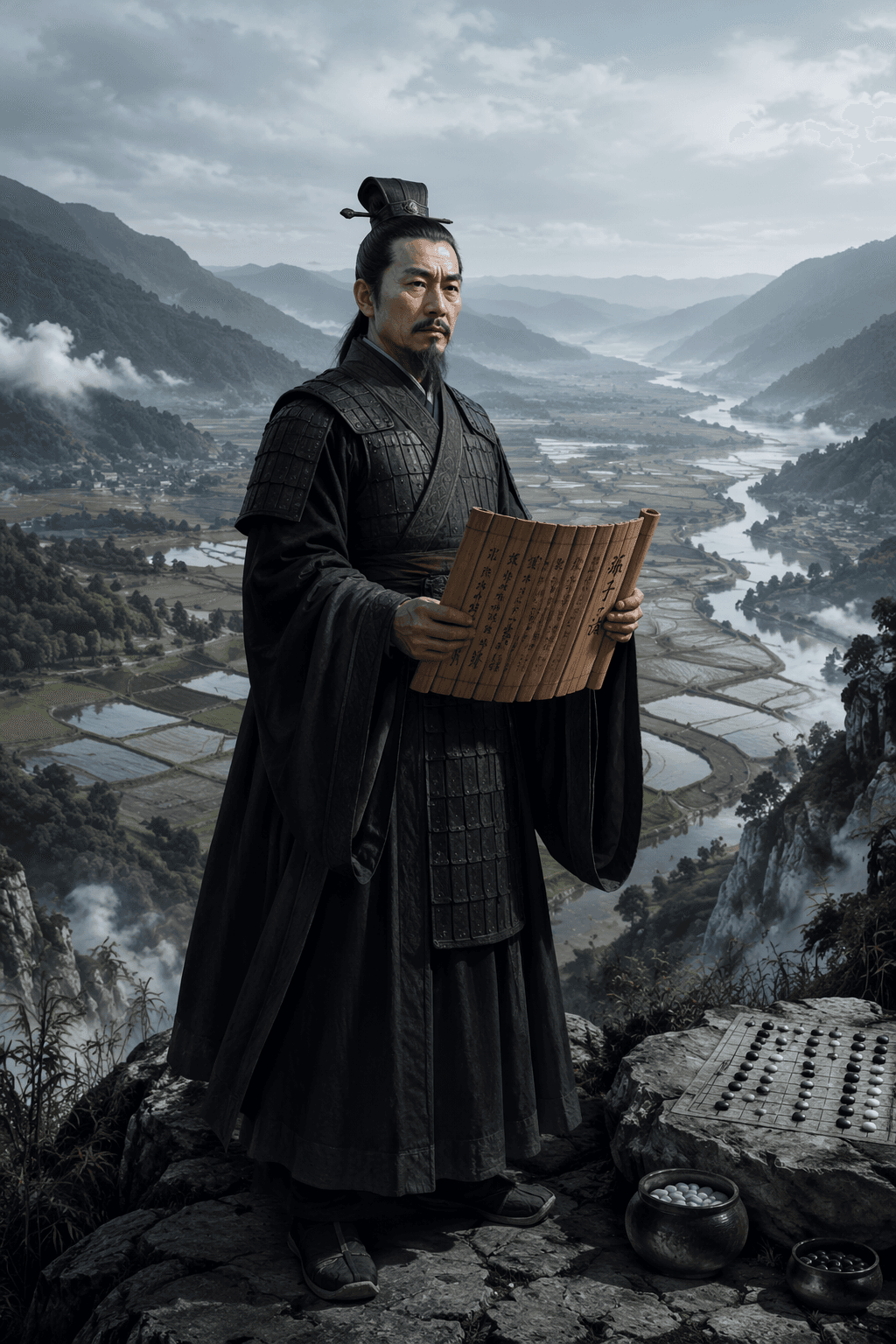
Sunzi (544–496 BCE) was a foundational figure in Strategy. Known for teachings on complete intelligence (zhi), victory without fighting, strategic deception, Sunzi shaped Chinese civilization for millennia.
Biography
The Sage of War Who Abhorred War
Sunzi — Sun Wu of Qi — occupies a paradoxical position in Chinese intellectual history: he is the supreme authority on warfare whose deepest conviction is that war should be avoided whenever possible. This is not hypocrisy but the logical endpoint of strategic thinking. If your goal is to prevail, then the cheapest and most reliable way to prevail is to create conditions where conflict does not occur. A doctor who heals by preventing illness is greater than one who heals by treating it. A general who wins without fighting is greater than one who wins through bloodshed. Sunzi's entire treatise is an argument for escalation avoidance disguised as a manual of combat.
The historical record on Sunzi is thin. Sima Qian's Records of the Grand Historian tells us that Sun Wu was born in Qi, migrated to Wu, and presented his thirteen-chapter treatise to King Helu of Wu around 512 BCE. The king, skeptical, tested Sunzi by asking him to drill his palace concubines. Sunzi divided the women into two companies, appointed the king's two favorite concubines as company commanders, and issued orders. The women giggled. Sunzi explained the orders again. They giggled again. Sunzi then executed the two favorite concubines. The king protested; Sunzi replied that once a commander receives orders, he must execute them regardless of the status of those who disobey. The remaining women drilled flawlessly. King Helu, shaken, appointed Sunzi as his general.
With Sunzi as general and Wu Zixu as strategist, Wu defeated the powerful state of Chu in a series of campaigns that demonstrated the principles Sunzi had codified. Wu's forces struck where Chu was unprepared, moved rapidly along unexpected routes, and achieved decisive victories without prolonged engagement. Sunzi then vanished from history — whether he retired, died, or simply disappeared is unknown. But the thirteen chapters he left behind became the most studied military text in human history, and its influence extends far beyond the battlefield.
The Five Factors of Victory
Sunzi opens his treatise not with tactics but with a comprehensive analytical framework. Every military decision, he argues, depends on five factors: the Way (dao — moral unity between ruler and people), Heaven (tian — weather, season, and cosmic conditions), Earth (di — terrain, distances, and ground conditions), the Commander (jiang — the general's wisdom, credibility, courage, and strictness), and Discipline (fa — organization, logistics, and regulation). No modern strategic framework — whether SWOT analysis, Porter's five forces, or PEST analysis — is more comprehensive or more elegantly structured. Sunzi understood that victory is not primarily a matter of martial skill but of total situational awareness.
This analytical rigor is what separates Sunzi from every other military writer. He does not celebrate heroism, daring, or sacrifice — he celebrates calculation, positioning, and prevention. "The general who wins a battle makes many calculations in his temple before the battle is fought," he writes. "The general who loses makes but few calculations beforehand." Victory is determined before the first arrow flies; the battle merely reveals what calculation has already decided.
Deception and Perception
Sunzi's most famous statement — "all warfare is based on deception" — is often read as a license for dishonesty, but it is actually a theory of information. In any competitive situation, the side that controls what the other side believes holds the strategic advantage. If your opponent thinks you are weak, they will attack where you are strong. If they think you are far, they will neglect the defense of their near positions. Sunzi's deception is not lying but the strategic management of perception — a concept that modern marketing, politics, and cybersecurity all depend on.
The Economy of Force
Sunzi's insistence on speed and efficiency is not a moral preference but a strategic necessity. Prolonged campaigns exhaust resources, demoralize troops, and create opportunities for third parties to intervene. "There is no instance of a nation benefiting from prolonged warfare," he states flatly. This principle — that time is the enemy of the aggressor — has been validated by every major conflict in history. Napoleon's prolonged campaign in Russia destroyed his army. America's prolonged engagement in Vietnam drained its resources and morale. Sunzi wrote the lesson two and a half millennia ago; the world keeps learning it the hard way.
Beyond the Battlefield
The Art of War has been read by generals for twenty-five centuries, but its deepest influence lies in its application to non-military domains. Every competitive situation — business, politics, sports, negotiation — contains the same structural elements that Sunzi analyzed: opposing forces, asymmetric information, limited resources, and the imperative to achieve objectives at minimum cost. The text's brevity and generality make it infinitely adaptable: it describes not a particular kind of warfare but the structure of strategic situations themselves. Sunzi wrote about war, but what he described was strategy — and strategy, as every modern CEO, diplomat, and poker player knows, is a far broader domain than combat.
Core Concepts
Complete Intelligence (Zhi) (知)
Sunzi insists that victory depends on complete knowledge of both your own capabilities and your opponent's — "know yourself and know your enemy, and you will never be defeated." Information is not a supplement to strategy; it is its foundation. Every decision must be grounded in thorough understanding of conditions, resources, and intentions on all sides.
孙子坚持胜利取决于对自身能力与对手状况的全面了解——"知己知彼,百战不殆。"信息不是战略的补充;它是战略的基础。每一决策都必须建立在各方条件、资源与意图的透彻理解之上。
Victory Without Fighting (不战而胜)
Sunzi's highest ideal is not battlefield triumph but strategic positioning so advantageous that the opponent concedes without a clash. "The supreme art of war is to subdue the enemy without fighting." This principle elevates strategy above combat, diplomacy above coercion, and prevention above remedy.
孙子的最高理想不是战场凯旋而是战略定位的优势大到对方不经交锋即屈服。"不战而屈人之兵,善之善者也。"此原则将战略提升于战斗之上,外交提升于胁迫之上,预防提升于补救之上。
Strategic Deception (诡道)
"All warfare is based on deception," Sunzi declares. When capable, appear incapable; when near, appear far; when far, appear near. Deception is not dishonesty in the moral sense but the strategic management of perception — controlling what your opponent believes about your intentions so that their responses serve your plan rather than theirs.
"兵者,诡道也。"孙子宣言。能而示之不能,近而示之远,远而示之近。诡道不是道德意义上的不诚实,而是对感知的战略管理——控制对手对你意图的信念,使其回应服务于你的计划而非他们的。
Adaptability (Bian) (变)
"In battle, there are no fixed conditions," Sunzi warns. Water shapes itself to the terrain; the commander shapes strategy to the situation. No plan survives contact with reality, and the skillful leader is one who can transform their approach moment by moment. Rigidity is death; flexibility is survival.
"兵无常势。"孙子警示。水因地而流,将因势而变。没有计划能经得起与现实的接触,善于变通的领导者是能逐一时刻改变其方法的人。僵化是死亡;灵活是生存。
Speed and Economy (速与节)
Sunzi warns against prolonged campaigns: they exhaust resources, drain morale, and create opportunities for other threats. "In war, then, let your great object be victory, not lengthy campaigns." Speed is not recklessness but efficiency — achieving the objective before costs outweigh gains. Economy of force means concentrating resources at the decisive point while minimizing expenditure elsewhere.
孙子警告旷日持久之役:耗竭资源,消磨士气,为其他威胁创造机会。"兵贵胜,不贵久。"速不是鲁莽而是效率——在成本超出收益之前达成目标。力的节约意味着将资源集中于决胜点,同时最小化其他地方的消耗。
Notable Quotes
“Know yourself and know your enemy, and you will never be defeated. If you know yourself but not your enemy, you will win half and lose half. If you know neither yourself nor your enemy, you will be defeated in every battle.”
知己知彼,百战不殆;不知彼而知己,一胜一负;不知彼不知己,每战必殆。
This is Sunzi's most famous maxim and his most essential principle. Information is the master resource. Complete knowledge yields complete confidence; partial knowledge yields partial results; ignorance yields certain failure.
“The supreme art of war is to subdue the enemy without fighting.”
不战而屈人之兵,善之善者也。
Sunzi's highest strategic ideal. A victory achieved through superior positioning, diplomatic leverage, or psychological dominance is better than any battlefield win, because it costs nothing and leaves no scars. The greatest commander is the one whose victory is invisible.
“All warfare is based on deception. When capable, appear incapable. When active, appear inactive. When near, appear far. When far, appear near.”
兵者,诡道也。能而示之不能,用而示之不用,近而示之远,远而示之近。
Sunzi opens his text not with a moral statement but with a strategic one: perception management is the first art of war. Deception here means controlling what your opponent sees, so their strategic calculations are built on false premises and their actions serve your plan.
“Water shapes its course according to the nature of the ground over which it flows; the soldier shapes his victory according to the enemy he faces.”
水因地而制流,兵因敌而制胜。
The analogy to water connects Sunzi to the Daoist tradition of adapting to circumstances rather than imposing fixed plans. There is no one correct strategy — only the strategy that fits the particular terrain, opponent, and moment. Wisdom is responsiveness, not rigidity.
“Speed is the essence of war. In a prolonged campaign, the army will be exhausted and the treasury drained.”
兵贵胜,不贵久。久则钝兵挫锐,攻城则力屈,久暴师则国用不足。
Sunzi warns that time is the enemy of the aggressor. Every day of campaign increases costs, depletes resources, and risks unexpected complications. The strategist who wins quickly and economically wins best. Protracted effort, no matter how heroic, is strategic failure.
“Appear at points which the enemy must hasten to defend; march swiftly to places where you are not expected.”
攻其所必救,行其所不意。
The principle of strategic surprise applied through positioning rather than speed. You do not need to be faster than your opponent — you need to be where they cannot afford not to respond, and then move to the place they left unprotected. This is strategy as geometry, not brute force.
“If you know the enemy and know yourself, you need not fear the result of a hundred battles. If you know yourself but not the enemy, for every victory gained you will also suffer a defeat.”
知己知彼,百战不殆。不知彼而知己,一胜一负。
The gradient of knowledge creates a gradient of outcomes. Complete intelligence yields reliable success; partial intelligence yields unreliable outcomes; zero intelligence yields certain failure. Sunzi makes information the master variable of strategic life.
“Let your plans be dark and impenetrable as night, and when you move, fall like a thunderbolt.”
谋如幽冥,动如雷震。
The duality of strategy: concealment during preparation, maximum impact during execution. Plans that are visible can be countered; actions that are anticipated can be blocked. The perfect operation is one the opponent never sees coming, and whose effects are irreversible before they can respond.
Modern Influence
Sunzi in Business Strategy
The Art of War is the most influential military text in corporate boardrooms worldwide. Its principles — know your competitive environment, attack where the opponent is unprepared, win without fighting whenever possible — have been adapted by strategists from McKinsey consultants to Silicon Valley founders. The chapter on terrain analysis became market segmentation; the chapter on espionage became competitive intelligence; the principle of winning through positioning rather than confrontation became brand strategy.
Sunzi and Game Theory
Sunzi's emphasis on information asymmetry, strategic deception, and calculated risk anticipates modern game theory by millennia. His concept that victory belongs to the side that better understands the "five factors" (way, weather, terrain, command, discipline) is a comprehensive model of strategic decision-making under uncertainty — essentially a premodern version of what economists now call decision theory.
Sunzi in Sports and Negotiation
Professional sports teams, poker players, and diplomatic negotiators all apply Sunzi's principles. The coaching strategy of studying an opponent's patterns and attacking their weaknesses is pure Sunzi. The negotiator who creates conditions where the other party's best option is agreement is practicing Sunzi's principle that the supreme art of war is to subdue the enemy without fighting.
Read the Story
Experience Sunzi's philosophy through Sophie's narrative journey.
Read Chapter →Key Concepts · 核心概念
Explore these Strategy concepts in our glossary →
Related Content 相关内容
Frequently Asked Questions常见问题
What is Sunzi known for?孙子 以什么著称?+
Sunzi (544–496 BCE) is known for Complete Intelligence (Zhi), Victory Without Fighting, Strategic Deception. As a key figure in Strategy, Sunzi's ideas shaped Chinese thought for centuries.
What era did Sunzi live in?孙子 生活在什么时代?+
Sunzi lived during the 544–496 BCE.
What school of thought did Sunzi found or belong to?孙子 属于哪个学派?+
Sunzi belonged to the Strategy school (兵家).
Want to speak with Sunzi 孙子? Try the Oracle.
Consult the Oracle →Free: 3 consultations per day · Pro: 10 per day + deep readings