Wang Yangming
王阳明
Yuyao · 余姚
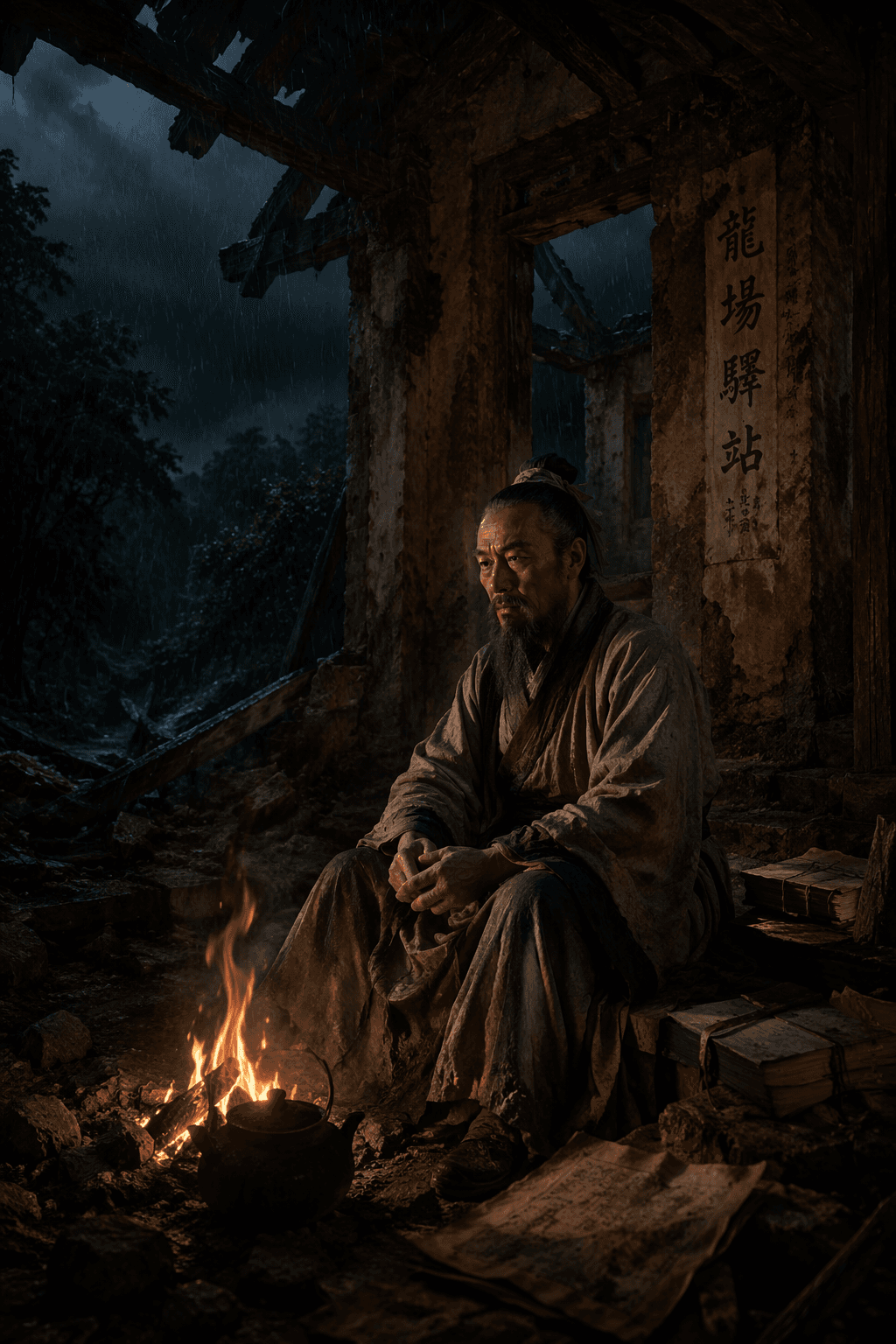
Wang Yangming from Yuyao (1472–1529 CE) was a foundational figure in School of Mind. Known for teachings on unity of knowledge and action (zhi xing he yi), extending innate moral knowing (zhi liangzhi), mind is principle (xin ji li), Wang Yangming shaped Chinese civilization for millennia.
Biography
The Philosopher Who Proved His Philosophy in Battle
Wang Yangming — Wang Shouren, styled Bo'an, known as Yangming after the mountain where he built his studio — is the only philosopher in history whose theories were validated through military conquest. Most philosophers write books; Wang Yangming suppressed rebellions, governed provinces, and won battles — and then wrote about what those experiences taught him. His philosophy is not a system of abstract reasoning but a record of discoveries made under extreme pressure: in the face of death, exile, political persecution, and the chaos of war. When he says "to know and not to act is not truly to know," he is not offering a theoretical argument; he is reporting what he learned when he tried to act on incomplete knowledge and nearly died.
Born in 1472 CE in Yuyao, Zhejiang, Wang Yangming grew up with a single consuming ambition: to become a sage. Not a scholar, not an official, not a successful man — a sage, a person whose moral understanding was so complete that every action flowed from it naturally. At fifteen, he and a friend sat before bamboo stalks for seven days, trying to discover the bamboo's principle (li) through direct contemplation, as Zhu Xi's method of ge wu zhi zhi prescribed. They stared, they thought, they concentrated. After seven days, both were exhausted and ill. Wang Yangming concluded: "The principle of bamboo is not something you can discover by staring at it. Zhu Xi's method must be wrong." This was the beginning of a disillusionment with orthodox Neo-Confucianism that would take thirty more years to resolve.
The Longchang Enlightenment
The resolution came at the lowest point of Wang Yangming's life. In 1506, he protested against the corrupt eunuch Liu Jin and was punished with forty strokes of the bamboo, imprisonment, and exile to Longchang — a remote outpost in Guizhou, the far southwest of China, then considered a barbaric wilderness. He arrived sick, destitute, and surrounded by people who spoke languages he could not understand. He built a shelter from stone, foraged for food, and faced the daily possibility of death from disease, exposure, or assassination by Liu Jin's agents.
One night, in this extremity, Wang Yangming had an experience that transformed his entire understanding. He described it as a sudden, overwhelming recognition: "The sage's way is complete within my own nature. Seeking principle in external things was the mistake of my youth." This was not a gentle intellectual insight but a seismic shift — the collapse of his previous framework and the emergence of a new one. He had spent thirty years looking outside himself for moral principle; in one instant, he realized that principle was already present inside him as innate moral knowing (liangzhi). The bamboo had nothing to teach him that his own mind did not already know. The entire project of external investigation was a misunderstanding of where knowledge resides.
The Unity of Knowledge and Action
From the Longchang Enlightenment, Wang Yangming developed his signature doctrine: the unity of knowledge and action (zhi xing he yi). His argument is phenomenological rather than logical. You cannot know pain without having experienced it; you cannot know cold without having felt it; you cannot know courage without having acted courageously. Genuine knowledge is not information stored in the mind but understanding embodied in behavior. When you truly understand something, the understanding transforms you, and the transformation is visible in your actions. "To know and not to act is not truly to know" — this is not a moral imperative but a descriptive claim: if your knowledge does not change your behavior, then what you have is information, not understanding.
This doctrine has radical implications for every domain of human life. In education, it means that reading without practice is worthless; you cannot learn ethics from a textbook alone. In politics, it means that policies not implemented are not real policies; a law that is not enforced does not exist. In personal development, it means that every insight must be tested in action; a person who says they understand forgiveness but cannot forgive has not truly understood. Wang Yangming's standard is uncompromising: the test of knowledge is not what you say but what you do. If your actions do not reflect your claimed understanding, your understanding is incomplete.
The Mind Is Principle
Wang Yangming's second major doctrine — "the mind is principle" (xin ji li) — directly contradicts Zhu Xi's position. Zhu Xi taught that principle (li) exists in external objects and must be discovered through investigation. Wang Yangming teaches that principle exists only in the mind and manifests as innate moral knowing (liangzhi). There is no principle outside the mind; there is no need to look outward; the moral order of the cosmos is already present in your own consciousness, and the task of philosophy is not to discover it but to uncover it — to remove the selfish desires and mental habits that obscure liangzhi so that it can operate freely.
This is a radical simplification of the Neo-Confucian project. Where Zhu Xi required the student to investigate one thing after another, gradually accumulating understanding of principle across multiple domains, Wang Yangming requires the student to look directly inward, discover liangzhi, and then extend it to every situation. The method is not accumulation but uncovering. You do not need to study ten thousand things; you need to see one thing — the innate knowing that is already present in your own mind — and then trust it in every encounter.
The Philosopher at War
Wang Yangming's philosophy was tested in the most demanding arena imaginable: military conflict. In 1519, the Prince of Ning — Zhu Chenhao — launched a rebellion with a hundred thousand troops, intending to overthrow the emperor. Wang Yangming, serving as a regional official, had no army, no authorization, and no time to prepare. He improvised. He spread false intelligence to confuse the prince's strategy, raised a volunteer force from local militias, cut the prince's supply lines, and defeated the rebellion in forty-three days — a military achievement that baffled every professional general in China. When asked how he had accomplished this, Wang Yangming replied that his military decisions were guided by liangzhi — his innate moral knowing, operating without interference from fear, ambition, or calculation. In the chaos of battle, he trusted the spontaneous discernment of his own moral consciousness and acted on it immediately, without hesitation. This was not bravado but the practical demonstration of his philosophical claim: genuine knowledge generates immediate, appropriate action. If you truly know what is right, you do not need to deliberate; you act, and the action is right.
Wang Yangming spent his final years suppressing rebellions in Guangxi, teaching his students, and writing the texts that would define the School of Mind for centuries. He died in 1529, on a boat returning from a military campaign, at the age of fifty-seven. His last words were: "This mind is bright. What more is there to say?" — a final affirmation that the philosophy he had discovered in exile and proven in battle was, in the end, nothing more than the recognition that the mind's own innate knowing is sufficient for every challenge a human being can face.
Core Concepts
Unity of Knowledge and Action (Zhi Xing He Yi) (知行合一)
Wang Yangming's signature doctrine: knowledge and action are not two separate things but one single process seen from two angles. Knowing is the beginning of action; action is the completion of knowing. "To know and not to act is not truly to know." This is not a moral injunction to act on your knowledge but a metaphysical claim: genuine knowledge automatically generates action. If you truly know something is right, you will do it. If you do not do it, your knowledge is incomplete — you have information, not understanding.
王阳明标志性学说:知与行不是两件分离的事而是从两个角度看的同一单一过程。知是行的开始;行是知的完成。"知而不行只是未知。"这不是关于依知行动的道德训诫而是形而上学主张:真正的知识自动生成行动。如果你真正知道某事是对的,你会做它。如果你不做,你的知识是不完整的——你有信息而非理解。
Extending Innate Moral Knowing (Zhi Liangzhi) (致良知)
Liangzhi — innate moral knowing — is the spontaneous, unmediated knowledge of right and wrong that every person possesses. It does not need to be learned or cultivated; it only needs to be uncovered by removing the selfish desires and mental habits that obscure it. "Extending liangzhi" means acting on this innate knowledge in every situation, allowing it to guide your decisions without interference from ego, fear, or calculation.
良知——先天道德知——是每个人拥有的关于对错的自发的、无中介的知识。它不需要学习或培养;只需通过移除遮蔽它的私欲与心理习惯来揭露。"致良知"意味着在每一情境中依此先天知识行动,让它引导你的决定而不受自我、恐惧或算计的干扰。
Mind Is Principle (Xin Ji Li) (心即理)
Wang Yangming's metaphysical thesis: the mind itself is the source of all principle (*li*). There is no principle outside the mind that needs to be discovered through investigation of external objects. Zhu Xi's method of ge wu zhi zhi — investigating things to discover their principle — is mistaken, because the principle you seek is already present in your own mind as liangzhi. You do not need to look outward; you need to look inward.
王阳明的形而上学论题:心本身就是一切理的来源。没有心之外的理需要通过外物的探究来发现。朱熹格物致知的方法——探究事物发现其理——是错误的,因为你寻求的理已以良知的形式存在于你自己的心中。你不需要向外看;你需要向内看。
The Longchang Enlightenment (龙场悟道)
Wang Yangming's transformative experience in 1508: while exiled in the remote outpost of Longchang, facing death and despair, he suddenly realized that "the sage's way is complete within my own nature; seeking principle in external things was a mistake." This was not an intellectual insight but a total reorientation — the realization that everything he had been seeking outside himself was already present inside. The experience of radical disillusion followed by radical discovery became the template for the School of Mind's approach to enlightenment.
王阳明1508年的转化体验:被贬谪到边远龙场驿,面临死亡与绝望时,他突然悟到"圣人之道,吾性自足,向之求理于事物者误也"。这不是理智洞见而是全然转向——意识到他一直在向外寻求的一切已存在于内在。彻底幻灭之后是彻底发现的经历成为心学觉悟方法的范式。
Four Sentence Teaching (四句教)
Wang Yangming's summary of his entire philosophy in four propositions: "In the original mind, there is no good and no evil. When intention moves, there is good and there is evil. Knowing good and evil is innate moral knowing. Doing good and removing evil is extending innate moral knowing." The four sentences trace the complete arc of moral experience: from the original state of undifferentiated clarity, through the moment of intention that creates distinction, to the innate knowing that discerns the distinction, to the action that resolves it.
王阳明以四个命题总结其全部哲学:"无善无恶心之体,有善有恶意之动,知善知恶是良知,为善去恶是格物。"四句追踪道德经验的完整弧线:从无分别明净的原初状态,经创造区分的意动时刻,到辨别区分的先天良知,到解决区分的行善去恶。
Notable Quotes
“To know and not to act is not truly to know. Only when you act on what you know does your knowledge become real. Knowledge is the beginning of action; action is the completion of knowledge.”
知而不行,只是未知。知是行的主意,行是知的功夫;知是行之始,行是知之成。
Wang Yangming's signature statement. He does not merely urge people to act on their knowledge; he redefines knowledge as a process that includes action as its essential component. Information that does not lead to action is not knowledge but mere intellectual familiarity. Genuine understanding transforms the knower; if you have not been transformed, you have not truly understood.
“The sage's way is complete within my own nature. Seeking principle in external things was the mistake of my youth.”
圣人之道,吾性自足,向之求理于事物者误也。
The sentence Wang Yangming spoke at his moment of enlightenment at Longchang. It reverses the entire direction of his previous philosophical search: instead of looking outward at objects for their principle, he now recognizes that principle is already complete within his own mind. The sage's way is not something to be acquired but something to be recognized.
“In the original mind, there is no good and no evil. When intention moves, there is good and there is evil. Knowing good and evil is innate moral knowing. Doing good and removing evil is the investigation of things.”
无善无恶心之体,有善有恶意之动,知善知恶是良知,为善去恶是格物。
Wang Yangming's complete philosophical system compressed into four lines. The original mind is clear and undifferentiated. Intention creates moral distinctions. Innate moral knowing perceives these distinctions spontaneously. Acting on this knowing — doing good and removing evil — is the true meaning of "investigation of things." The entire arc from original nature to moral action in four steps.
“Liangzhi is the knowing that is originally present in the mind. It is not something acquired through study or practice. It is the spontaneous knowing of what is right and what is wrong in every situation.”
良知者,心之本体,即前所谓恒照者也。不待学而能,不待虑而知。
Wang Yangming defines liangzhi as the mind's original capacity for moral discernment — not learned, not cultivated, not acquired, but always present. Like the eye's capacity to see light, liangzhi is the mind's capacity to see right and wrong. It does not need to be created; it needs only to be trusted and followed.
“The mind is principle. There is no principle under heaven that exists outside the mind. The mind is the master of heaven and earth, the pivot of all things.”
心即理也。天下又有心外之事、心外之理乎?心者,天地之主宰,万物之枢机。
Wang Yangming's metaphysical thesis: the mind is not a thing that contains principle; the mind IS principle. There is no external repository of moral order that you need to discover and internalize. The moral order of the cosmos is already present in your own consciousness as liangzhi. The entire project of seeking principle in external things is a fundamental misunderstanding of where principle resides.
“When a child falls into a well, you feel alarm and compassion immediately. This is liangzhi — the spontaneous knowing that demands you act. If you merely feel compassion but do not run to rescue the child, your liangzhi is obstructed by selfish calculation.”
见孺子入井,必有怵惕恻隐之心,此即良知也。若但有此心而不往救之,则良知为私欲所蔽。
Wang Yangming uses Mencius's famous example to illustrate liangzhi. The spontaneous compassion you feel is liangzhi in operation. But if you stop at feeling and do not act — if you calculate whether helping is convenient, whether the child's parents will reward you, whether you might be harmed — then selfish desire has obstructed liangzhi. True moral knowing includes the impulse to act; feeling without acting is liangzhi blocked.
“I used to believe that knowledge and action were two separate things and that one could know without acting. But when I truly understood, I saw that they are one. The person who knows pain has experienced pain; the person who knows cold has experienced cold. You cannot know what you have not experienced.”
昔者吾以为知行分而为二,可以知而不行。今真知其合一也。知痛者必已痛矣,知寒者必已寒矣。未有未尝痛而知痛者,未有未尝寒而知寒者。
Wang Yangming uses embodied experience to prove his thesis. You cannot know pain without having experienced it; you cannot know cold without having felt it. Knowledge that comes from experience is inseparable from the experience itself. Abstract information about pain is not the same as knowing pain. This is an argument from phenomenology: genuine knowledge is always embodied, always participatory, never merely theoretical.
“To investigate things does not mean to examine every object in the external world. It means to correct the mind's intentions so that liangzhi can operate without obstruction.”
格物者,非格天下之物也。正其心之不正,以归于正,即格物也。致吾心之良知于事事物物,则事事物物皆得其理矣。
Wang Yangming radically reinterprets Zhu Xi's "investigation of things" (ge wu). Zhu Xi meant examining external objects to discover their principle; Wang Yangming means correcting the mind's own intentions so that innate moral knowing can operate freely. The "things" to be investigated are not bamboo stalks and rivers but the mind's own distortions — the selfish desires, fixed opinions, and mental habits that obstruct liangzhi. Investigation is inner work, not outer observation.
Modern Influence
Wang Yangming in Modern Leadership Training
Wang Yangming's unity of knowledge and action has been adopted by modern leadership development programs as a foundational principle. The insight that "knowing without doing is not truly knowing" resonates with experiential learning theory, design thinking methodology, and the military principle that plans not tested in action are worthless. When a management trainer says "you cannot learn leadership from a book alone; you must practice it," they are unknowingly restating Wang Yangming's core doctrine.
Wang Yangming and Modern Psychology
Wang Yangming's concept of innate moral knowing (liangzhi) anticipates modern findings in moral psychology. Research on moral intuitions by Jonathan Haidt and others shows that moral judgments often arise instantaneously, before deliberate reasoning — exactly what Wang Yangming described as the spontaneous operation of liangzhi. His teaching that this innate knowing only needs to be uncovered, not created, parallels the therapeutic principle that the client already possesses the resources for healing and the therapist's job is to help remove the obstacles.
Wang Yangming's Influence on Japan
Wang Yangming's philosophy became one of the intellectual foundations of the Meiji Restoration. Japanese samurai who studied his doctrine of "unity of knowledge and action" found in it a moral framework that justified decisive, courageous action grounded in clear moral conviction — exactly the ethic a revolutionary movement needs. The Oyomei (Japanese Wang Yangming) school produced leaders like Saigo Takamori and influenced the Bushido code's emphasis on action over theory.
Read the Story
Experience Wang Yangming's philosophy through Sophie's narrative journey.
Read Chapter →Key Concepts · 核心概念
Explore these School of Mind concepts in our glossary →
Related Content 相关内容
Frequently Asked Questions常见问题
What is Wang Yangming known for?王阳明 以什么著称?+
Wang Yangming (1472–1529 CE) is known for Unity of Knowledge and Action (Zhi Xing He Yi), Extending Innate Moral Knowing (Zhi Liangzhi), Mind Is Principle (Xin Ji Li). As a key figure in School of Mind, Wang Yangming's ideas shaped Chinese thought for centuries.
What era did Wang Yangming live in?王阳明 生活在什么时代?+
Wang Yangming lived during the 1472–1529 CE. Based in Yuyao.
What school of thought did Wang Yangming found or belong to?王阳明 属于哪个学派?+
Wang Yangming belonged to the School of Mind school (心学).
Want to speak with Wang Yangming 王阳明? Try the Oracle.
Consult the Oracle →Free: 3 consultations per day · Pro: 10 per day + deep readings